 UK Test Prep guide
British Festivals, Traditions and Sport: What the Life in the UK Test Asks
By Muhammad Shahid Khan · · 4 min read
Quick answer
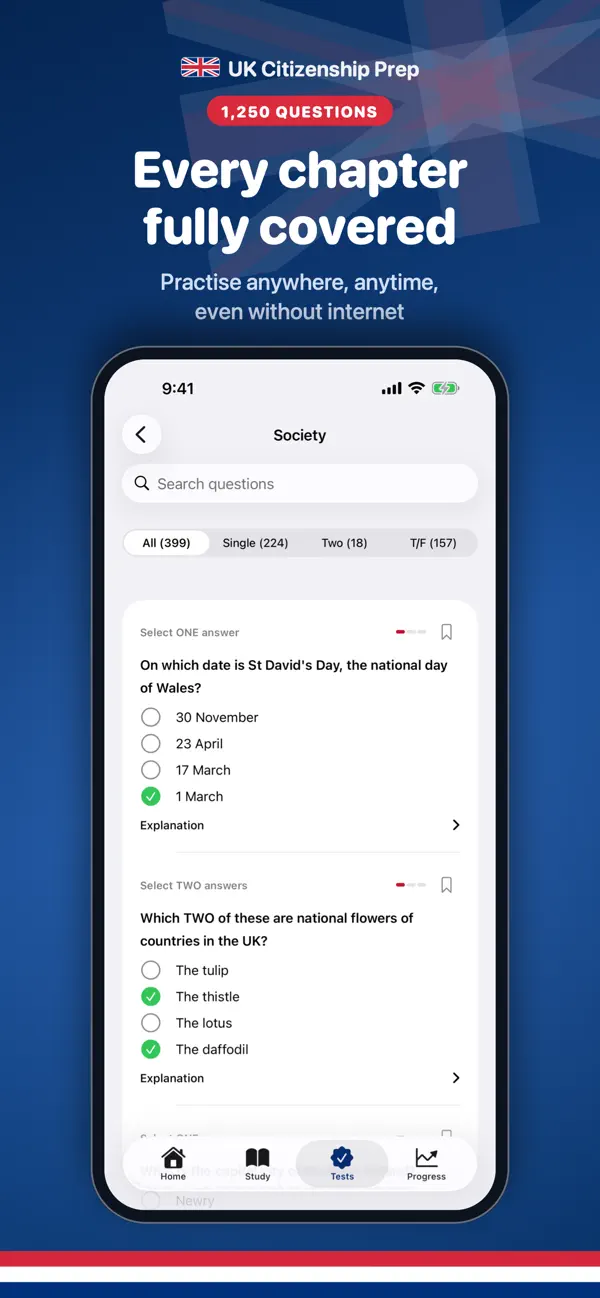
The test asks about the patron saints’ days (St David 1 March, St Patrick 17 March, St George 23 April, St Andrew 30 November), festivals such as Christmas, Easter, Diwali, Hanukkah, Eid and Vaisakhi, traditions such as Bonfire Night (5 November) and Remembrance Day (11 November), and sports including football, cricket, rugby, tennis at Wimbledon and golf at St Andrews.
UK Test PrepCitizenship, ILR & Visa Prep · Free on the App StoreDownload free →| St David (Wales) | 1 March |
|---|---|
| St Patrick (Northern Ireland) | 17 March |
| St George (England) | 23 April |
| St Andrew (Scotland) | 30 November |
| Bonfire Night | 5 November |
| Remembrance Day | 11 November |
Chapter 4 of the handbook, A modern, thriving society, covers religion, festivals, sport, arts and leisure. It feels like general knowledge, so people skip it, and then lose marks on dates and names. Here are the facts that come up, grouped so they are easy to learn together.
I build UK Test Prep, a free iPhone and iPad app for the Life in the UK test, and the screenshots in this guide come from it. If you want to test yourself as you read, get UK Test Prep on the App Store.
When are the patron saints’ days?
| Nation | Saint | Day | Public holiday? |
|---|---|---|---|
| Wales | St David | 1 March | No |
| Northern Ireland | St Patrick | 17 March | Yes |
| England | St George | 23 April | No |
| Scotland | St Andrew | 30 November | Yes |
Only Scotland and Northern Ireland have their patron saint's day as an official holiday. A memory trick: the order through the year is D, P, G, A: David, Patrick, George, Andrew.
Which festivals and special days does the test cover?
- Christmas Day (25 December) and Boxing Day (26 December) are public holidays.
- New Year (1 January) is a public holiday. In Scotland, 31 December is Hogmanay, and 2 January is also a holiday.
- Easter: Good Friday and Easter Monday are public holidays. Lent starts after Shrove Tuesday, or Pancake Day.
- Valentine's Day (14 February), April Fool's Day (1 April, jokes until midday), Mothering Sunday (three weeks before Easter) and Father's Day (third Sunday in June).
- Halloween (31 October), an ancient festival with roots in the pagan festival of Samhain.
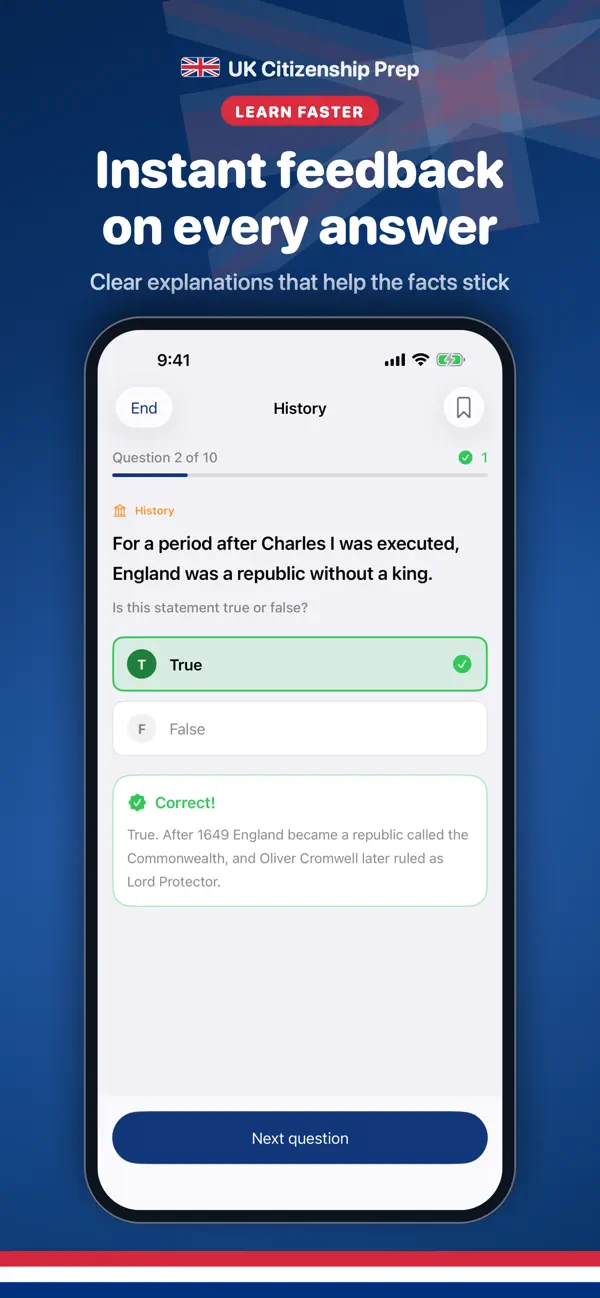
- Bonfire Night (5 November) marks the failed Gunpowder Plot of 1605, when Guy Fawkes and others tried to blow up the Houses of Parliament.
- Remembrance Day (11 November) remembers those who died fighting for the UK. People wear poppies and hold a two-minute silence at 11 am.
What about other religious festivals?
- Diwali: the Hindu and Sikh festival of lights, celebrated over five days. Leicester hosts a famous celebration.
- Hanukkah: the Jewish festival of light, lasting eight days, in November or December.
- Eid al-Fitr: marks the end of Ramadan. Eid al-Adha: remembers that the prophet Ibrahim was willing to sacrifice his son, and marks the end of the Hajj.
- Vaisakhi: a Sikh festival celebrating the founding of the Sikh community, the Khalsa, usually on 14 April.
Which sports and events should I know?
| Sport | What to know |
|---|---|
| Football | The most popular sport; each nation has its own league and national team |
| Cricket | Originated in England; the Ashes against Australia |
| Rugby | Union and league; the Six Nations Championship |
| Tennis | Wimbledon, the oldest tennis tournament in the world, at the All England Club |
| Golf | The modern game can be traced to 15th-century Scotland; St Andrews is known as the home of golf; The Open |
| Horse racing | Royal Ascot, the Grand National at Aintree, the Scottish Grand National at Ayr |
| Motor sport | The British Grand Prix, at Silverstone |
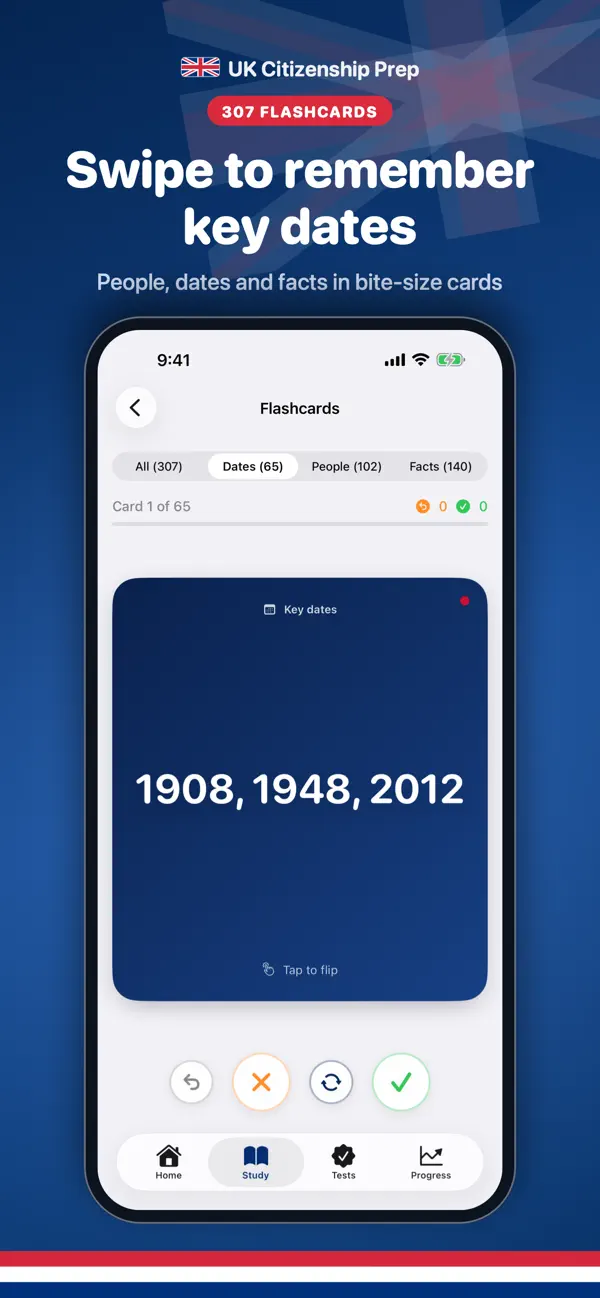
| The Olympics | London hosted in 1908, 1948 and 2012. The Paralympics began with Sir Ludwig Guttmann at Stoke Mandeville |
Famous sportspeople are covered in famous British people in the Life in the UK test.
How do I revise this chapter?
- Make a calendar of every date in this article, from 1 January to 31 December.
- Learn the patron saints together, in order through the year.
- Pair each tradition with its reason: Bonfire Night with the Gunpowder Plot, poppies with Remembrance Day.
- Test yourself after each section, then mix chapters in timed mock exams. See how to use practice questions.
How UK Test Prep helps
- 1,250 original practice questions across all five handbook chapters, each with an explanation.
- 46 study note sections written from the official handbook.
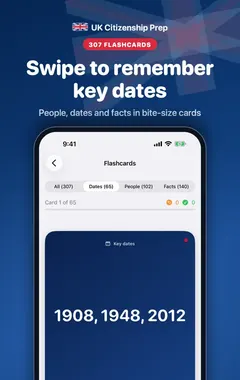
- 307 flashcards for the dates, people and facts that need memorising.
- A realistic mock exam: 24 questions, a 45-minute timer and the 18-mark pass line.
- A weak-areas list, readiness score, streaks and progress by chapter.
- Works fully offline, with no account. Every feature is free; an optional purchase removes ads.
Download UK Test Prep free on the App Store and pass the Life in the UK test first time. UK Test Prep is independent and not affiliated with the UK Government or the Home Office.
Frequently asked questions
When is St David’s Day?
1 March. St David is the patron saint of Wales.
When is St Patrick’s Day?
17 March. St Patrick is the patron saint of Northern Ireland, where it is a public holiday.
When is St George’s Day?
23 April. St George is the patron saint of England.
When is St Andrew’s Day?
30 November. St Andrew is the patron saint of Scotland, where it is a public holiday.
What is Bonfire Night?
5 November, marking the failed Gunpowder Plot of 1605 to blow up the Houses of Parliament.
What happens on Remembrance Day?
On 11 November people remember those who died fighting for the UK, wear poppies and hold a two-minute silence at 11 am.
What is Hogmanay?
New Year’s Eve, 31 December, in Scotland.
What is Vaisakhi?
A Sikh festival, usually on 14 April, celebrating the founding of the Khalsa.
How long is Diwali?
It is celebrated over five days.
Where is the home of golf?
St Andrews in Scotland.
What is the oldest tennis tournament in the world?
Wimbledon, at the All England Club.
When did London host the Olympic Games?
In 1908, 1948 and 2012.
UK Test PrepDownload free