 RoadTick guide
UK Roundabout Rules: Lanes, Signals and Mini-Roundabouts Explained
By Muhammad Shahid Khan · · 4 min read
Quick answer
At a UK roundabout you give way to traffic coming from your right, unless signs or markings say otherwise. To turn left, signal left and use the left lane. To go straight ahead, usually use the left lane with no signal on approach. To turn right, signal right and use the right lane. In every case, signal left after passing the exit before the one you want.
RoadTickHazard Perception & Mock Tests · Free on the App StoreDownload free →| Priority | Give way to traffic from the right |
|---|---|
| Turning left | Signal left, left lane |
| Going ahead | Usually left lane, no signal on approach |
| Turning right | Signal right, right lane |
| Leaving | Signal left after the exit before yours |
| Highway Code | Rules 184 to 190 |
Roundabouts worry a lot of learners, mostly because of lanes and signals. The rules are actually short. Once you know the three standard routes, left, ahead and right, every roundabout works the same way, and the theory test questions become easy.
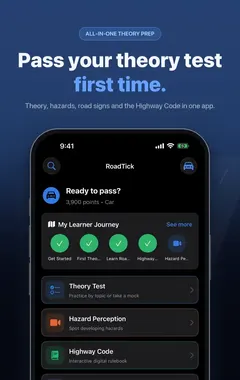
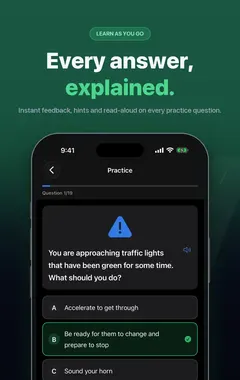
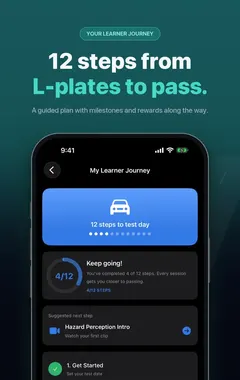
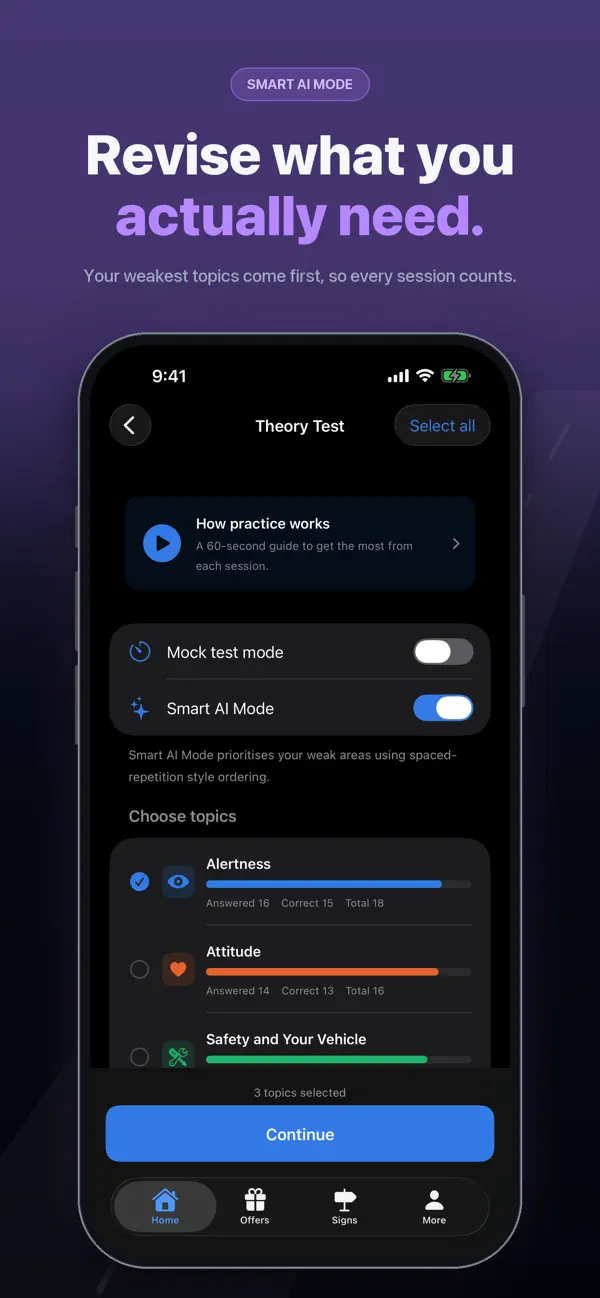
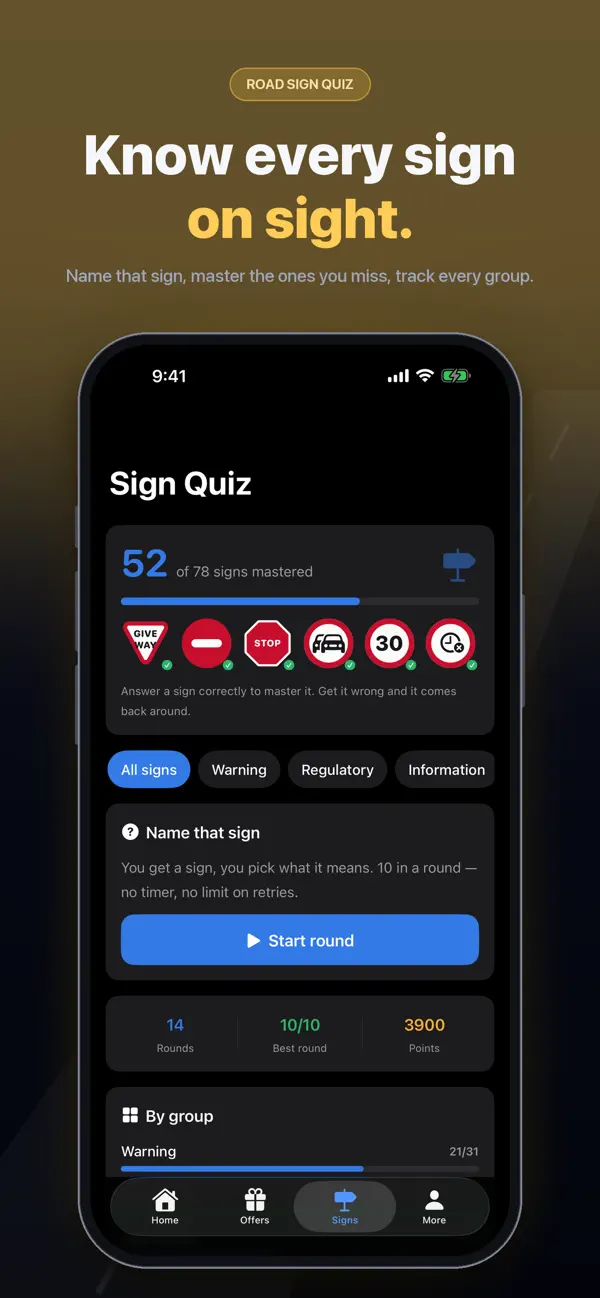
I build RoadTick: Driving Theory Test, a free UK theory test app for iPhone and iPad, and the screenshots in this guide come from it. If you want to practise as you read, get RoadTick on the App Store.
Who has priority at a roundabout?
You give way to traffic approaching from your right, which is already on the roundabout, unless road markings or traffic lights tell you otherwise. Check whether the lane you want to join is clear, and keep moving if it is. You do not have to stop at the give way line if the way is clear.
Which lane and signal should I use?
| Where you are going | Approach signal | Lane | On the roundabout |
|---|---|---|---|
| First exit (left) | Left | Left lane | Keep left and stay signalling left |
| Straight ahead | None | Left lane (unless markings say otherwise) | Signal left after the exit before yours |
| Right, or full circle | Right | Right lane | Keep to the right, then signal left after the exit before yours |
Lane arrows painted on the road and signs on the approach override these defaults. If the markings say the right lane is for "ahead" too, follow them.
What should I watch for on a roundabout?
- Cyclists and horse riders may stay in the left lane even when going right. Give them plenty of room and do not cut across them as they signal.
- Long vehicles may need to use more than one lane, and may signal one way while their trailer swings the other.
- Vehicles indicating may not turn where you expect. Watch the vehicle, not just the signal.
- Pedestrians crossing at the exits, especially when you turn left.
How do mini-roundabouts work?
A mini-roundabout is a white painted circle, sometimes slightly raised. The rules are the same: give way to the right, and signal in the same way. In addition:
- Drive around the central marking if you can. Large vehicles may have to drive over it.
- Avoid U-turns at mini-roundabouts.
- Watch for vehicles already on it, or about to turn right in front of you, because space is tight.
- At double mini-roundabouts, treat each one separately.
What is a spiral roundabout?
On a spiral roundabout, lane markings guide you outwards towards your exit. Choose the lane for your exit on the approach, using the signs, and follow your lane round. You should not need to change lanes on the roundabout itself.
What do theory test questions ask about roundabouts?
- Who to give way to: traffic from the right.
- Which signal and lane to use for left, ahead and right.
- How to treat cyclists, horse riders and long vehicles.
- What a mini-roundabout sign looks like: a blue circle with three white arrows.
For the signs themselves, see UK road signs explained. Roundabouts are also a common developing hazard in hazard perception clips: see hazard perception test tips.
How RoadTick helps
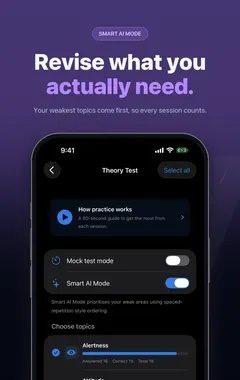
- Practice questions for every theory topic, each with a plain-English explanation.
- Timed mock tests in the real format: 50 questions in 57 minutes, scored against the pass mark of 43.
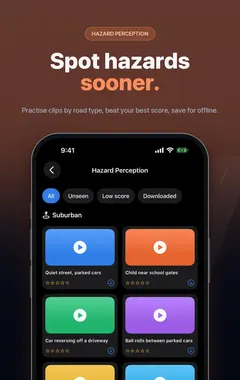
- Hazard perception practice to build the timing the second part tests.
- The Highway Code broken into short sections that are easy to revise.
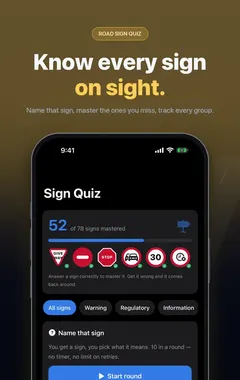
- UK road signs and markings with clear images and meanings.
- Progress tracking that shows which topics still need work before you book.
Download RoadTick free on the App Store and turn spare minutes into theory test practice. RoadTick is an independent app and is not affiliated with the DVSA.
Frequently asked questions
Who has priority at a roundabout in the UK?
Traffic already on the roundabout, coming from your right. Give way to it unless signs, markings or lights say otherwise.
Which lane do I use to turn left at a roundabout?
The left lane, signalling left on the approach and keeping left on the roundabout.
Which lane do I use to go straight on at a roundabout?
Usually the left lane, unless road markings show otherwise. Do not signal on approach; signal left after passing the exit before yours.
Which lane do I use to turn right at a roundabout?
The right lane, signalling right on the approach. Keep right, then signal left after passing the exit before yours.
When should I signal left to leave a roundabout?
After you pass the exit before the one you want.
Do I have to stop at a roundabout?
No. If the way is clear, you can keep moving. Give way to traffic from the right if it is not.
Can cyclists use the left lane to turn right?
Yes. Cyclists and horse riders may stay in the left lane while signalling right. Give them plenty of room.
Can I drive over a mini-roundabout?
Drive around the central marking if you can. Large vehicles may have to drive over it.
Can I do a U-turn at a mini-roundabout?
The Highway Code says to avoid U-turns at mini-roundabouts.
What does a blue circle with three white arrows mean?
A mini-roundabout ahead. Give way to traffic from the right.
Which Highway Code rules cover roundabouts?
Rules 184 to 190.
Does RoadTick cover roundabout questions?
Yes. RoadTick includes junction and roundabout questions with explanations, plus the related road signs.
RoadTickDownload free