 RoadTick guide
How to Revise the Highway Code Without Reading It Cover to Cover
By Muhammad Shahid Khan · · 5 min read
Quick answer
Revise the Highway Code by section, not front to back. Focus first on the rules tested most: hierarchy of road users (Rules H1 to H3), speed limits and stopping distances, junctions and roundabouts, motorways, vulnerable road users and signs and markings. Test yourself with practice questions after each section.
RoadTickHazard Perception & Mock Tests · Free on the App StoreDownload free →| Official source | The Highway Code (GOV.UK), plus Know Your Traffic Signs |
|---|---|
| Major update | January 2022: hierarchy of road users, Rules H1 to H3 |
| Overtaking cyclists | Leave at least 1.5 m at speeds up to 30 mph |
| Mobile phones | Illegal to hold and use while driving: 6 points and a £200 fine |
| New drivers | Licence revoked at 6 points within 2 years of passing |
The Highway Code has over 300 rules plus annexes on signs, vehicle maintenance and penalties. Reading it from start to finish is slow, and most of it will not stick. A better approach is to revise it in sections, starting with the parts the theory test returns to again and again, and testing yourself after each one.
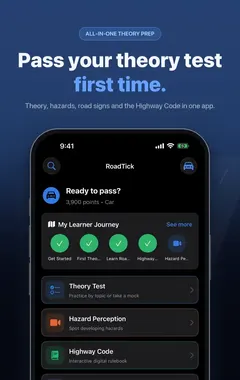
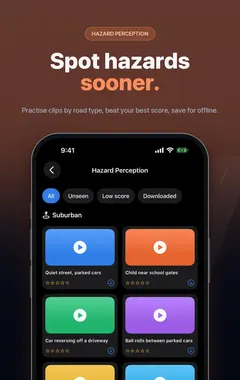
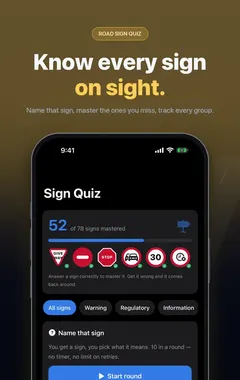
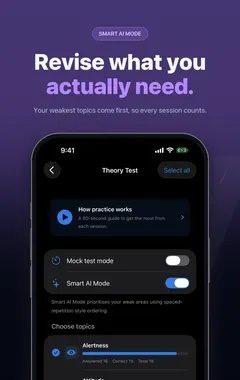
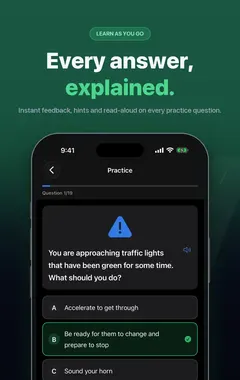
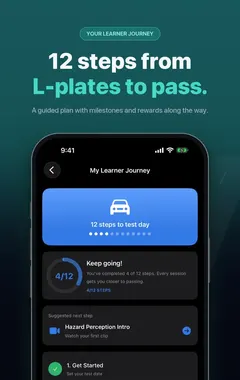
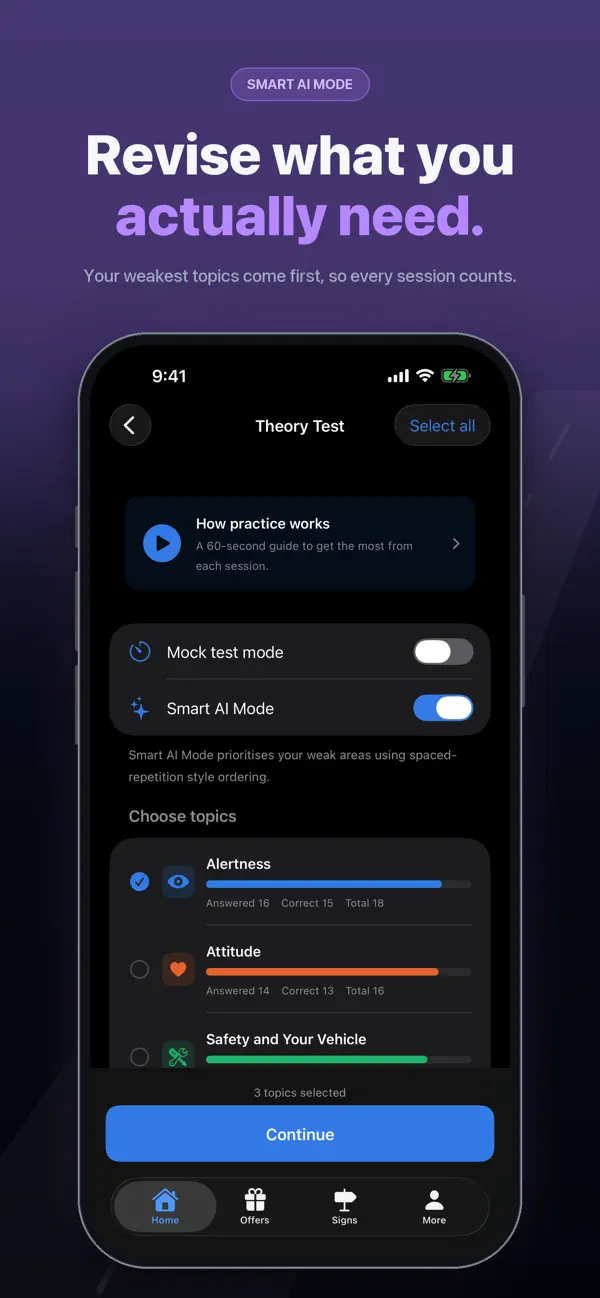
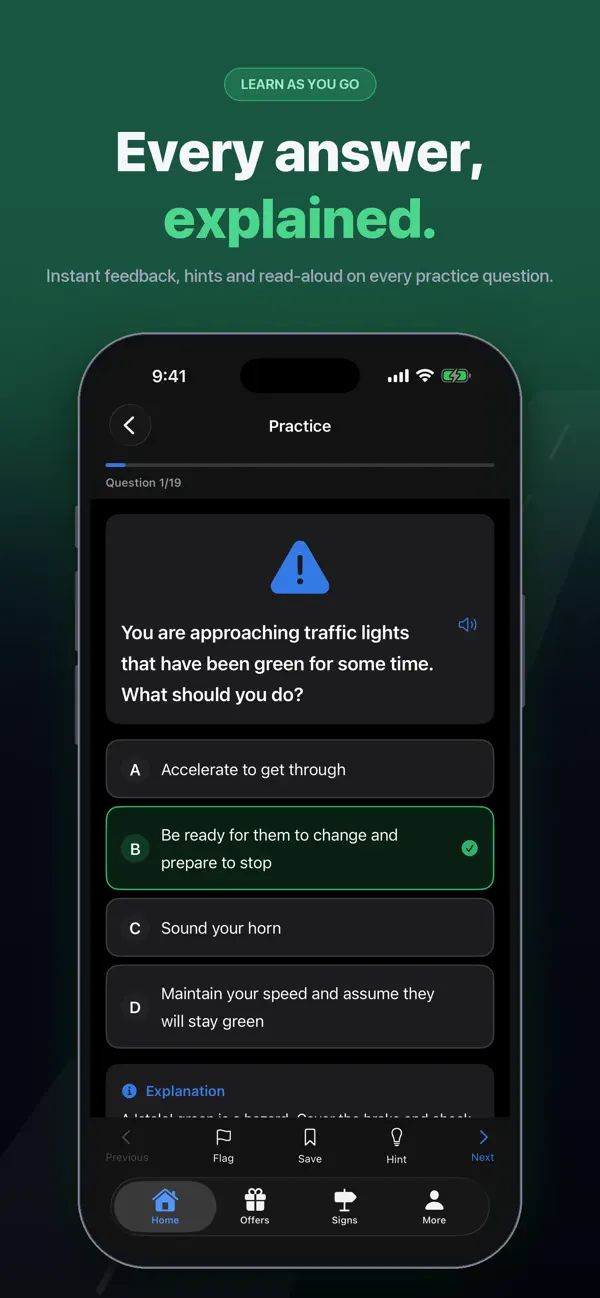
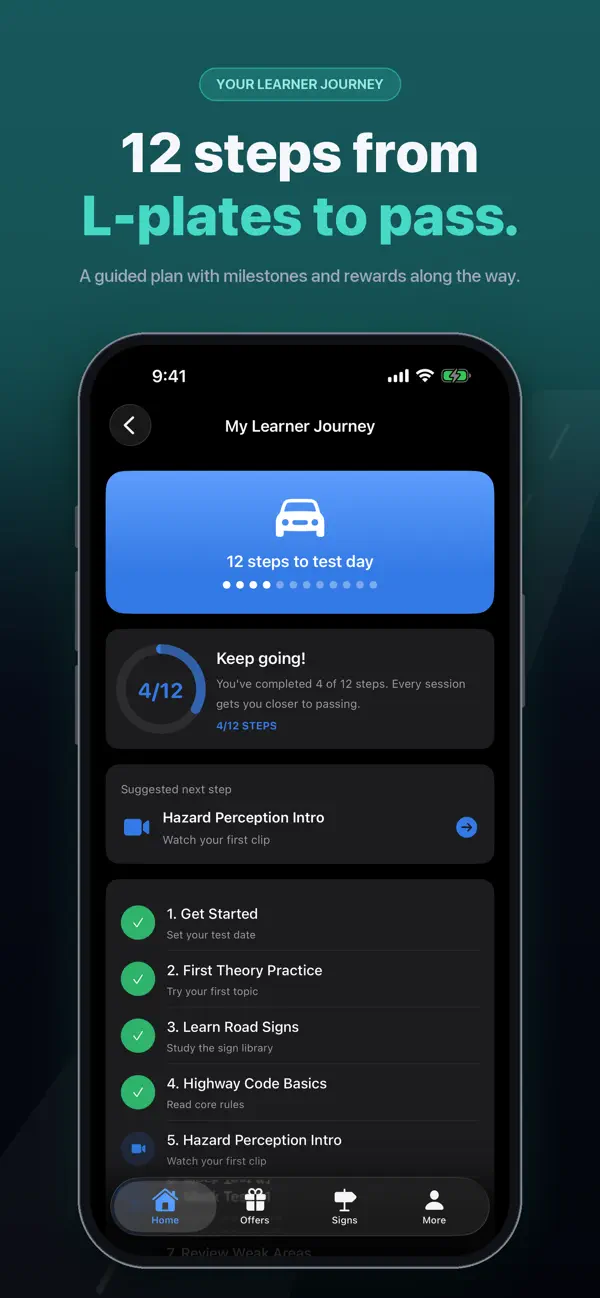
I build RoadTick: Driving Theory Test, a free UK theory test app for iPhone and iPad, and the screenshots in this guide come from it. If you want to practise as you read, get RoadTick on the App Store.
Which Highway Code sections matter most for the theory test?
- Introduction and the hierarchy of road users (Rules H1 to H3).
- Rules for pedestrians, cyclists, motorcyclists and horse riders, because so many questions are about how drivers should treat them.
- General rules, techniques and advice for all drivers, including speed limits, stopping distances and overtaking.
- Road junctions and roundabouts.
- Motorways.
- Breakdowns and incidents.
- Signs and road markings. See UK road signs explained.
What changed in the Highway Code in 2022?
In January 2022 the Highway Code was updated to protect the most vulnerable road users. These changes are now examined, and older revision material may not include them:
- Hierarchy of road users (Rule H1): those who can do the greatest harm (drivers of large vehicles, then cars) have the greatest responsibility to reduce danger to others.
- Pedestrian priority at junctions (Rule H2): when turning into or out of a side road, you should give way to pedestrians crossing or waiting to cross.
- Cyclists going straight ahead (Rule H3): do not cut across cyclists, horse riders or horse-drawn vehicles going ahead when you are turning.
- Overtaking cyclists: leave at least 1.5 metres at speeds up to 30 mph, and more at higher speeds.
- The Dutch reach: open your car door with the hand furthest from it, so you naturally look over your shoulder for cyclists.
Which numbers do I need to know?
| Topic | Figure |
|---|---|
| Stopping distance at 30 mph | 23 metres (about 6 car lengths) |
| Stopping distance at 70 mph | 96 metres (about 24 car lengths) |
| Following distance | At least a 2-second gap in good conditions, doubled in the wet |
| National speed limit, cars | 60 mph single carriageway, 70 mph dual carriageway and motorway |
| Overtaking cyclists | At least 1.5 m at up to 30 mph |
| Children in cars | A child car seat until 12 years old or 135 cm tall, whichever comes first |
| Using a hand-held phone while driving | 6 penalty points and a £200 fine |
| New drivers | Licence revoked at 6 points within 2 years of passing |
How do I revise the Highway Code faster?
- One section per session. Read it, then immediately answer practice questions on it.
- Turn numbers into flashcards. Speeds, distances, ages and penalties are easy marks once memorised.
- Read "must" and "should" carefully. Rules that say MUST or MUST NOT are legal requirements. "Should" is advice, but it can still be used as evidence in court.
- Picture it. For junction and roundabout rules, imagine yourself in the driver's seat.
- Revisit weak sections a few days later.
Do I need to buy the Highway Code?
No. The Highway Code is free to read on GOV.UK, and it is the official source. Printed copies and apps make revision easier, but the content is the same. RoadTick presents it in a format that is easy to revise, broken into sections with practice questions alongside.
For the full test format, see the UK driving theory test guide.
More guides you may find useful:
- UK Stopping Distances for the Theory Test: Chart, Car Lengths and an Easy Way to Remember
- UK Roundabout Rules: Lanes, Signals and Mini-Roundabouts Explained
- UK Road Markings Explained: White Lines, Yellow Lines, Zigzags and Cat’s Eyes
How RoadTick helps
- Practice questions for every theory topic, each with a plain-English explanation.
- Timed mock tests in the real format: 50 questions in 57 minutes, scored against the pass mark of 43.
- Hazard perception practice to build the timing the second part tests.
- The Highway Code broken into short sections that are easy to revise.
- UK road signs and markings with clear images and meanings.
- Progress tracking that shows which topics still need work before you book.
Download RoadTick free on the App Store and turn spare minutes into theory test practice. RoadTick is an independent app and is not affiliated with the DVSA.
Frequently asked questions
Do I need to read the whole Highway Code for the theory test?
You need to know it, but reading it cover to cover is not the most effective way. Revise it section by section and test yourself after each one.
What is the hierarchy of road users?
A principle added in 2022 (Rule H1): road users who can cause the greatest harm, such as drivers of large vehicles, have the greatest responsibility to reduce the danger they pose to others.
Do pedestrians have priority at junctions?
Since 2022, drivers turning into or out of a side road should give way to pedestrians crossing or waiting to cross (Rule H2).
How much space should I give a cyclist when overtaking?
At least 1.5 metres at speeds up to 30 mph, and more at higher speeds.
What is the stopping distance at 30 mph?
23 metres in good conditions, about six car lengths.
What is the two-second rule?
Keep at least a two-second gap behind the vehicle in front in good conditions. Double it on wet roads.
What is the penalty for using a phone while driving?
6 penalty points and a £200 fine for holding and using a phone. New drivers with 6 points within 2 years of passing lose their licence.
What is the difference between MUST and SHOULD in the Highway Code?
MUST and MUST NOT are legal requirements. SHOULD is advice, but not following it can be used as evidence in court.
Is the Highway Code free?
Yes. It is free to read on GOV.UK.
What is the Dutch reach?
Opening your car door with the hand furthest from it, so you turn your body and check for cyclists and other road users.
When do children need a car seat?
Until they are 12 years old or 135 cm tall, whichever comes first.
Does RoadTick include the Highway Code?
Yes. RoadTick presents the Highway Code in sections that are easy to revise, with practice questions alongside.
RoadTickDownload free